
For most backyards, the best answer is a mix: shade sails over the water and tanning ledge for flexible, budget-friendly coverage, a pergola or pavilion over the seating and dining zone for a permanent outdoor room, and umbrellas or cantilevers filling in the gaps. Which combination wins depends on four things: how much sun exposure your specific zones get, your wind conditions, whether you want something permanent or seasonal, and your budget. Everything below walks through materials, costs, installation, and upkeep so you can plan with confidence.
TL;DR:
- Shade sails are ideal for covering water and tanning ledges because they are affordable, quick to install, and adaptable to irregular pool shapes.
- Overlays like pergolas and pavilions suit social zones with furniture but require more upfront planning for drainage, electrical wiring, and permits.
- Heavy-duty, commercial-grade fabrics with at least 260 GSM are necessary for durability and UV protection, especially in high-UV regions like Texas.
- Prioritizing shade over activity areas such as steps and seating zones before covering water ensures better usability and comfort during pools use.
- Coordinating shade installation with pool construction reduces costs, simplifies permitting, and ensures proper footing and drainage planning.
Table of Contents
- Types of Shade Structures for Pools: Sails, Pergolas, Pavilions, and More
- Which Fabric or Material Actually Holds Up Around a Pool?
- How Do You Decide What to Shade First?
- What Should You Budget for Pool Shade?
- What Do You Need to Know Before Installing?
- How Long Do Pool Shade Structures Last, and What Maintenance Do They Need?
- Longhorn Pools’ Checklist for Building Shade Into a Pool Project
- Permanent or Flexible: Which Way Should You Lean?
- Build Your Pool and Shade as One Coordinated Project
- Where to Go Deeper on Sails, Fabric, and Hardware Specs
- Sources
Types of Shade Structures for Pools: Sails, Pergolas, Pavilions, and More
Every pool deck has different sun problems, so the right shade structures for pools usually aren’t one single product. They’re a combination chosen for specific zones.
Shade sails stretch fabric between anchor points at angled heights, and they’re the go-to for covering water and tanning ledges because they can be sized and layered around irregular pool shapes without a single support post in the water. They’re relatively affordable, install fast, and can be swapped out seasonally. The trade-off: they need solid anchor points, and a poorly angled sail will sag and pool water in the first hard rain.
Pergolas and pavilions create a defined outdoor room, complete with a real roofline. They handle dining tables, outdoor kitchens, and long afternoon gatherings that sails just aren’t built for. But permanent structures require more upfront coordination for drainage, electrical runs, and post footings than any fabric solution.
Umbrellas and cantilevers are the cheapest, most flexible option and work well for spot-shading a lounge chair or side table. They don’t cover much square footage, and cheap bases blow over in Hill Country wind gusts.
Retractable awnings and pergola canopies split the difference: motorized or hand-cranked fabric that retracts when you want sun and extends when you don’t.
Temporary and landscape options (market umbrellas, planted trees, hedges) buy you time or fill gaps cheaply, though living shade takes years to mature.
A few rules of thumb:
- Sails excel over water and irregular footprints; pergolas excel over social zones with furniture.
- Retractables suit yards that want sun in winter and shade in summer without swapping hardware.
- Umbrellas are a stopgap, not a primary shade solution for a full-size pool deck.
- Most well-designed backyards layer two or more types rather than relying on one.
Which Fabric or Material Actually Holds Up Around a Pool?
The material question boils down to one decision: breathable or waterproof. Get this wrong and you’ll be replacing fabric within two seasons instead of ten.
Breathable HDPE shade cloth is the right call for anything directly over the pool or tanning ledge. The knitted weave lets wind and rain pass through instead of pushing against a solid surface, which is exactly why it handles wind better and doesn’t pool water the way solid fabric does over an open span.
Waterproof fabrics (often PVC-coated polyester) belong over lounge and dining areas where you want a dry seating zone underneath. They demand careful slope planning, because rain has to run off somewhere instead of soaking through.
Fabric weight (GSM) matters more than most buyers realize. Cheap consumer sails run under 180 GSM and degrade fast in Texas sun. Heavier commercial-grade fabrics in the 260+ GSM range hold shape longer and resist tearing at the seams.
Pro Tip: Ask any sail supplier for the GSM and UV-block percentage in writing. If they can’t produce both numbers, assume you’re looking at a budget product that won’t survive a Central Texas summer.
Quality heavy-duty sails can block 90 to 98% of UV rays and cut surface temperatures by roughly 10 to 20 degrees Fahrenheit, depending on fabric weight and color. Darker colors block more UV but run hotter to the touch; lighter colors reflect more heat but let slightly more UV through.
On hardware, look for:
- Perimeter cable and super-ring corners instead of basic D-rings for large spans.
- 316 marine-grade stainless steel fasteners and turnbuckles (304 stainless rusts faster near chlorinated water).
- Rated snap hooks and tensioners rather than hardware-store substitutes.
How Do You Decide What to Shade First?
Most homeowners shade the wrong thing first. They put a big sail over open water and leave the steps, tanning ledge, and seating area baking in full sun, which is backwards from how families actually use a pool. The smartest approach shades people and activity zones before it worries about covering every square foot of water.
Work through it in this order:
- Steps and tanning ledges first. These are where toddlers and non-swimmers linger longest, and they get zero relief from a breeze the way open water does.
- Seating and deck circulation second. Anywhere adults gather, eat, or set up a chair needs coverage that lasts more than 20 minutes.
- Secondary zones last. Equipment pads, side yards, and rarely used corners can wait, or go without shade entirely.
Before you buy anything, sketch your yard’s sun path across a summer day. Note where shadows fall at 10 a.m., 1 p.m., and 5 p.m., and mark realistic anchor points, whether that’s an existing wall, a new post, or the house itself. Anchor height changes the coverage angle dramatically. A sail hung six feet lower than expected will shade half the square footage you planned for.
Layering is where good plans separate from great ones. Pair a fixed pergola over the social zone with a movable sail near the water so you can adjust for wind or sun angle by season. If you’re running multiple sail panels, angle them so runoff flows away from walkways, and always keep a minimum seven-foot clearance over any area where people stand or walk.
What Should You Budget for Pool Shade?
Prices swing widely based on size, fabric grade, and whether the structure is fixed or motorized. A mid-range professionally installed shade sail typically runs $1,200 to $3,500 per sail, with DIY kits landing well under that and custom, motorized, or oversized sails pushing past it. Umbrellas run in the low hundreds. Pergolas and pavilions start in the low thousands for a basic kit structure and climb into the tens of thousands for a custom-built, fully wired outdoor room with a solid roof, lighting, and fans.
The line items that actually move the number:
- Engineering and permitting fees for anything permanent.
- Concrete footings, especially if bedrock or heavy clay requires extra excavation.
- Electrical runs for lighting, fans, heaters, or motorized retractable systems.
- Custom fabrication for non-standard shapes or oversized spans.
- Installation labor, which varies by how many anchor points and how much height the structure requires.
Watch for quotes missing footing specs, hardware grade, or engineering sign-off. Those are usually the ones that come in cheap and cost more later. A sail kit you can bolt to an existing wall is a reasonable DIY project. Anything involving new concrete footings, structural posts, or electrical work is worth handing to a professional who can pull the right permits.
What Do You Need to Know Before Installing?
Anchors are where most amateur shade projects fail. Perimeter cable with super-ring corners distributes tension around the entire edge of a sail instead of concentrating it at four corner points, which matters most on large spans or in wind-exposed yards. That design reduces edge fraying and tearing compared to standard corner D-rings on cheaper kits.
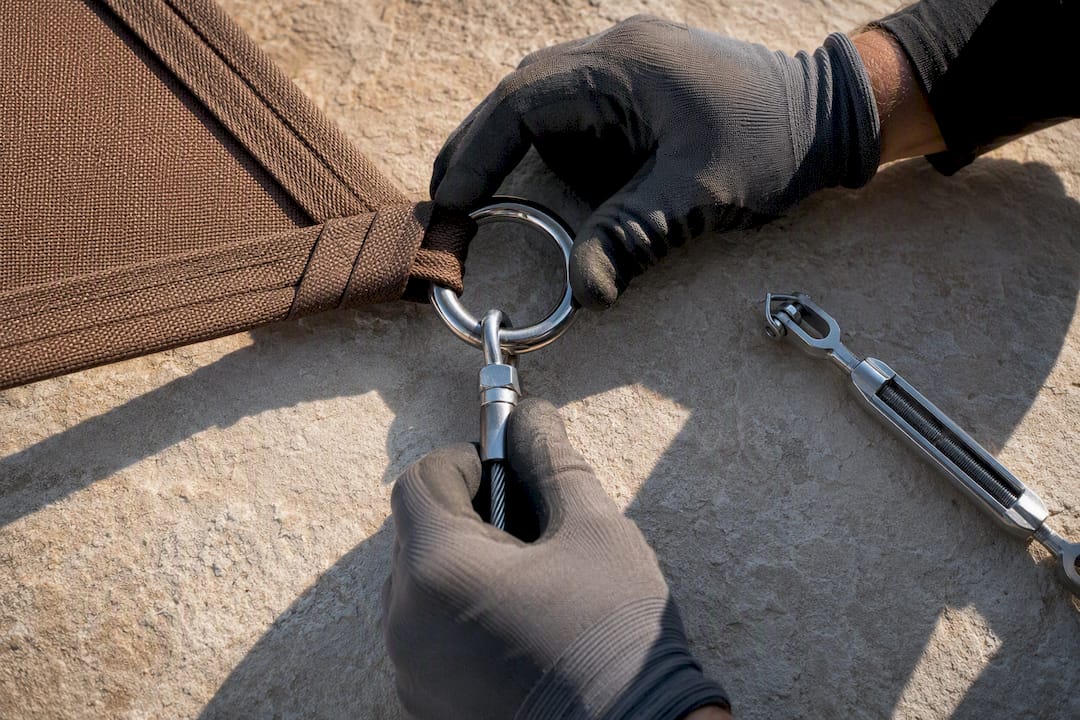
Footings for permanent posts typically need to be sized and depth-set based on local soil conditions and wind-load calculations, not guessed. Hill Country limestone and expansive clay behave very differently under a loaded post, and an engineer’s stamp on the footing spec is not optional for anything larger than a small residential sail.
Pro Tip: A sail that’s stretched flat instead of angled between a high point and a low point will collect rainwater like a bowl. That pooling accelerates fabric fatigue and can strain anchor points during a storm. Insist on at least one steep corner in every sail design.
Key installation checkpoints:
- Confirm footing depth and concrete specs match your soil type and regional wind ratings.
- Verify sail geometry includes a genuine high point and low point for water runoff.
- Check that hardware is rated for the span size, not just “heavy duty” marketing language.
- Ask whether your city or HOA requires permits or design review for permanent structures.
Permanent pergolas, pavilions, and large fixed sails commonly require permits or HOA approval, especially where they affect setbacks, height limits, or drainage patterns. Bring engineered drawings to that conversation. It moves faster than showing up with a sketch.
How Long Do Pool Shade Structures Last, and What Maintenance Do They Need?
Fabric shade structures need seasonal attention, not constant babysitting. Hose down sails and canopies a few times a year to clear pollen and dust, and take them down before major storms if your hardware isn’t rated for high wind. Waterproof fabrics need occasional mildew treatment in humid stretches.
Twice a year, walk the hardware:
- Check turnbuckles and tensioners for looseness or corrosion.
- Inspect webbing and stitching at stress points for fraying.
- Replace snap hooks or cables showing rust, especially near chlorinated splash zones.
- Look for UV-related fabric thinning, especially at fold lines.
Expect five to ten years from a quality sail before the fabric needs replacing, sometimes longer in shadier yards, shorter in full-sun, high-UV regions. Hardware, cable, and posts usually outlast the fabric itself. If the frame and anchors are still sound, refabrication (replacing just the panel) is almost always cheaper than a full structure replacement.
Longhorn Pools’ Checklist for Building Shade Into a Pool Project
Shade works best when it’s planned alongside the pool, not bolted on afterward. Before you order anything, walk through this:
- Sketch your use zones and mark where the sun sits at your peak swim hours.
- Inventory realistic anchor points, existing walls, structures, or planned posts.
- Confirm the electrical route now if you want lighting, fans, or a motorized retractable later.
- Check HOA and permit requirements before finalizing any permanent structure.
- Match footing and hardware specs to your soil and terrain, not a generic catalog spec.
Coordinating footings and drainage during the original pool build avoids the retrofit headaches that come with trenching an already-finished deck. If you’re renovating an existing pool, our pool build planning checklist walks through how to sequence shade into that scope without redoing finished hardscape.
Permanent or Flexible: Which Way Should You Lean?
Homeowners tend to overcommit to one shade solution when a hybrid approach almost always serves them better. A permanent pergola over the dining and lounge zone gives you a real outdoor room, while a movable sail or umbrella near the water lets you adjust for sun angle through the seasons without touching the fixed structure.
The most common mistake we see is sizing a single sail to cover everything, water, seating, and walkways alike, which usually means it covers none of them well. The fix is almost always to shade zones separately rather than chase total coverage with one oversized panel.
If shade is part of a new build or a major renovation, loop in your contractor before you finalize the pool layout. Anchor points and footings are far cheaper to plan than to retrofit.
— Mark
Build Your Pool and Shade as One Coordinated Project
Coordinating a pool build with a shade structure through separate contractors usually means two sets of footing plans, two permit applications, and someone eventually asking who was supposed to handle drainage near the posts. Custom pool builders in the Austin and Texas Hill Country area can coordinate shade structure footings, drainage, and electrical routing as part of the original build, not as an afterthought once the concrete is already poured.

That means one contractor handling engineering, permitting, and the finished outdoor room, instead of you managing the handoff between a pool crew and a separate shade installer. Experienced builders understand how limestone and expansive clay behave under a loaded post, and plan footings accordingly from day one. If you’re mapping out a new pool or renovation and want shade built into the design instead of retrofitted later, start with our pool build planning checklist or reach out to talk through your specific yard and terrain.
Where to Go Deeper on Sails, Fabric, and Hardware Specs
For sail-specific planning and geometry, the pool shade sail guide covers anchor angles and runoff design in detail. For hardware and fabric specs, review the heavy-duty super ring sail specs. Check your local building department for permit rules before finalizing any permanent structure.
Sources
- Pool Shade Sail Guide for Safer, Cooler Swimming Areas
- Heavy Duty Triangle Super Ring Sun Shade Sail – UV Protection丨Royal Shade – Royal Shade USA
- Pool Shade Structures: Pergolas & Cabanas | Beltway Pools
- Pool Shade Ideas: 12 Smart Solutions for 2026
- 15 Shade Ideas for a Perfect Pool Oasis