
Installed pool safety covers run about $1,200 to $3,000 for mesh, $1,800 to $3,600 for solid, and $7,000 to $25,000 or more for automatic systems. Basic solar and winter covers stay in the low hundreds since they carry no safety rating at all. The single biggest swing factor is your pool’s size and shape, plus whether the project needs new tracks, electrical work, or a full retrofit. Professional installation is where quotes really diverge, so get more than one before you decide.
TL;DR:
- Higher-cost automatic covers can reach $15,000 to $25,000, especially when retrofit work, electrical modifications, and full deck replacements are required.
- The total price for safety covers increases significantly with large or irregularly shaped pools, longer perimeter measurements, and complex geometry like freeform designs.
- Labor for installing automatic covers can range from $2,000 to $10,000, with additional costs for permit fees, electrical work, and removing existing covers.
- Automatic covers generally last 7 to 10 years for fabric components, with overall system longevity exceeding 10 years, but maintenance and repairs add to ongoing expenses.
- Choosing a cover type depends on safety needs; premium automatic or solid covers are recommended for families with children or year-round use, while basic mesh or solar covers suffice for seasonal, budget-conscious households.
Table of Contents
- How Much Does a Pool Safety Cover Cost by Type?
- What Drives the Price of a Pool Cover Up or Down?
- What Does Installation Labor Actually Cost?
- How Long Does a Pool Safety Cover Last, and What Does Upkeep Cost?
- How to Get Accurate Pool Cover Quotes Without Getting Burned
- What Hidden Costs Do Installers See on Real Jobs?
- When Is It Worth Paying More for a Pool Safety Cover?
- Get an Accurate Cover and Pool Quote From a Local Installer
- Where These Cost Figures Come From
- Sources
- FAQ
How Much Does a Pool Safety Cover Cost by Type?
Pick the wrong cover and you’re either overpaying for a feature you don’t need or underpaying for protection you actually do. Here’s how the main installed price ranges break down.
- Solar and winter covers: Usually $100 to $600 for materials alone, sometimes less if you’re buying a basic bubble-style solar blanket. They’re great at holding heat and keeping leaves out during off-season months, but they hold zero weight and provide no drowning protection. Think of them as a thermal blanket, not a barrier.
- Mesh safety covers: Typically $1,200 to $3,000 installed. Rainwater drains straight through the weave, which means less standing water, less winter maintenance, and no cover pump to buy. Expect 10 to 15 years of service life with reasonable care.
- Solid safety covers: Usually $1,800 to $3,600 installed. These block virtually all debris and light, which pool owners with heavy tree cover love, but you’ll need a cover pump to clear rainwater or it puddles and stresses the fabric. Lifespan runs similar to mesh, sometimes a bit longer with vinyl-coated polyester.
- Manual reel and retractable covers: The reel mechanism itself often costs $300 to $800, with labor adding a few hundred more depending on deck configuration.
- Automatic covers (autocovers): This is where costs jump. Tracks, a motor, recessed housing, and often a full deck retrofit push automatic covers to $7,000 to $25,000 installed, with many projects landing near $15,000.
For a standard 16×32 rectangular in-ground pool, expect roughly $1,800 to $3,200 for a mesh or solid safety cover installed, and closer to $12,000 to $20,000 if you’re adding an automatic system to that same pool.
What Drives the Price of a Pool Cover Up or Down?
Every installer prices the same handful of variables. Knowing them tells you exactly which line item is inflating your quote.
- Pool dimensions and perimeter length. More surface area means more material, and a longer perimeter means more anchor points, which adds both hardware and labor.
- Shape complexity. Rectangular pools are the cheapest to cover. Freeform shapes, sun shelves, and rock-edge water features all require custom cutting and more precise measuring, which raises labor time.
- Retrofit versus new construction. Adding an autocover to an existing pool often means cutting deck material, waterproofing the recessed track, and matching existing coping. That complexity is why retrofit labor can run significantly higher than a cover installed during original construction.
- Electrical and motor selection. Autocovers need a dedicated circuit and sometimes a deck-mounted housing box, both of which add electrician hours.
- Regional labor rates and season. Booking installation in early spring, right before pool season, usually costs more than scheduling in the off-season when crews have open calendars.
If you’re still deciding on pool dimensions, know that every extra foot of surface area and perimeter compounds the cover cost later.
What Does Installation Labor Actually Cost?
Materials are only half the invoice. Labor is where manual and automatic covers really part ways.
- Manual safety cover installation typically runs $400 to $1,500 in labor, usually completed in a single day for a standard rectangular pool.
- Automatic cover labor ranges from $2,000 to $10,000 depending on whether it’s new construction or a retrofit requiring deck work.
- Whether permits are needed depends on local regulations, but electrical work associated with automatic pool covers often requires inspections that may add moderate fees.
- Extra charges to watch for: old cover removal ($100 to $300), anchor repair or replacement, a dedicated cover pump ($150 to $400), and electrical hookup for autocover motors.
A typical timeline runs two to four weeks: measuring and quoting in week one, materials fabrication in weeks two and three, then a one to two day install once everything arrives.
How Long Does a Pool Safety Cover Last, and What Does Upkeep Cost?
Mesh covers generally last 10 to 15 years, solid covers land in a similar range with slightly better UV resistance in some materials, and automatic cover fabric panels typically need replacing every 7 to 10 years even though the track and motor system can outlast several fabric cycles.
Pro Tip: Divide your total installed cost by expected lifespan years to get a real annual number. A $2,400 mesh cover lasting 12 years costs about $200 a year, while a $15,000 autocover lasting 8 years on the fabric alone runs closer to $1,875 a year before you factor in motor servicing.
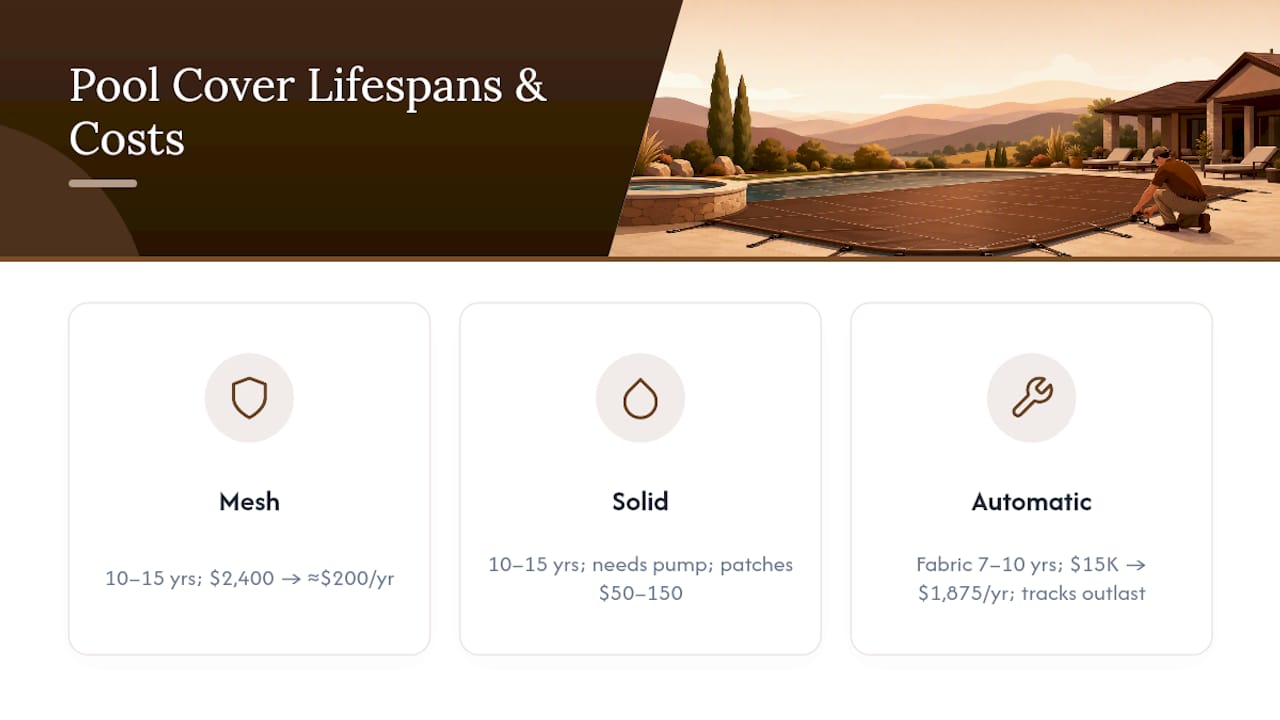
Routine maintenance is modest for mesh (occasional cleaning, spring anchor checks) but solid covers need a functioning cover pump to avoid standing water damage, plus occasional patch repairs running $50 to $150. Anchor and strap repairs for either type typically run $20 to $75 per anchor if you’re not doing it yourself. Automatic cover track and motor servicing usually costs $150 to $400 annually if you want a technician checking alignment and electrical connections.
How to Get Accurate Pool Cover Quotes Without Getting Burned
Before you call anyone, collect the pool’s length, width, and perimeter measurements, note any sun shelves or rock features, and identify your deck material (concrete, pavers, or natural stone all affect anchor drilling).
When quotes come in, insist on these line items broken out separately:
- Material cost by fabric type and thickness
- Number of anchors and anchor hardware cost
- Labor hours and hourly or flat labor rate
- Electrical work, if applicable, priced separately from cover labor
- Permit fees, if your municipality requires them
- Written warranty terms, including what’s covered and for how long
Watch for red flags: a labor quote that seems far below competitors usually means fewer anchors than the pool needs, and any installer who can’t confirm their cover meets ASTM F1346-91 safety standards shouldn’t be installing a safety cover at all. Get at least three quotes. Budget tiers generally break down as: basic mesh for tight budgets and seasonal use ($1,200 to $2,000), mid-range solid covers for year-round debris control ($2,000 to $3,600), and automatic systems for households prioritizing daily convenience and maximum safety ($10,000 and up). For help organizing your numbers before you call installers, a pool build planning checklist keeps your measurements and priorities straight.
What Hidden Costs Do Installers See on Real Jobs?
The quote that looks clean on paper rarely survives contact with an older deck, where property maintenance costs can quickly add up as explained in this landlord’s guide to maintenance budgeting. Deck patching around new anchor points, re-drilling anchors that hit rebar or old concrete, and unforeseen structural repairs on aging pools are the three charges that catch homeowners off guard most often.
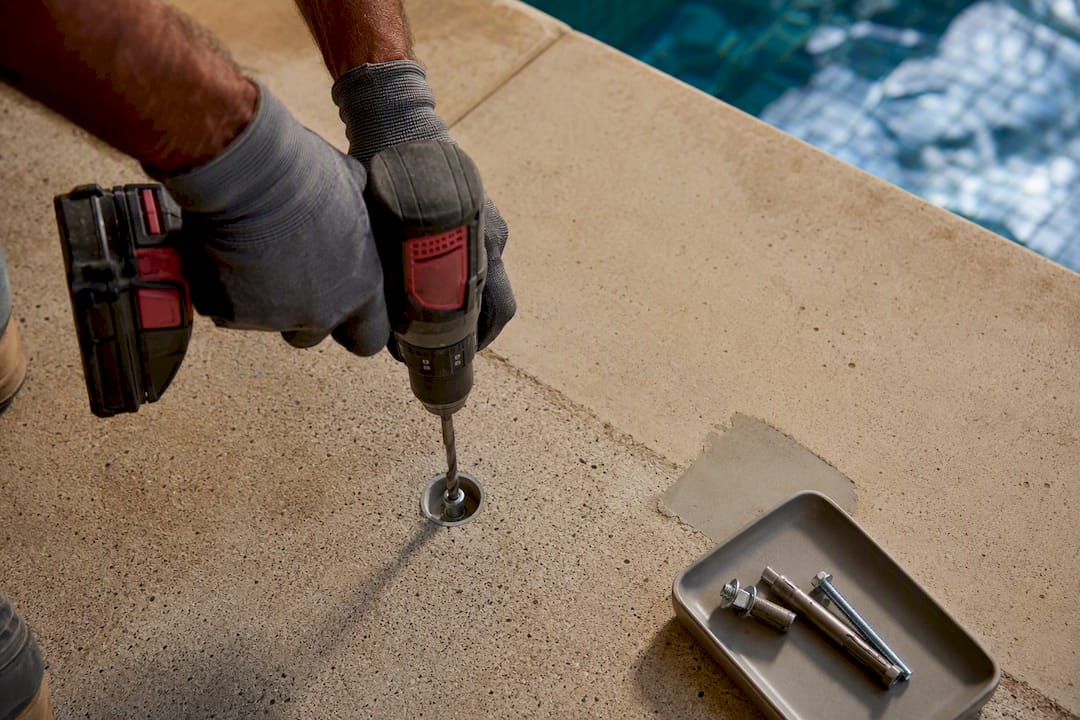
Anchor spacing isn’t a place to cut corners. Too few anchors, or anchors placed too far apart, can void a warranty and compromise the cover’s actual load-bearing performance, which defeats the entire purpose of buying a safety-rated product instead of a cheap tarp. On custom or retrofit installs, we tell homeowners to budget an extra 10 to 15% as contingency for whatever the deck reveals once work starts. It’s rarely needed in full, but it’s painful to not have it when it is.
When Is It Worth Paying More for a Pool Safety Cover?
Premium solid or automatic covers earn their price when young children are around the pool, when the pool serves an HOA or commercial property with liability exposure, or when the pool gets used year-round and convenience matters daily. A basic mesh or solar cover is perfectly reasonable for a seasonal pool in a household with no small children and a tight budget. If you’re unsure which tier fits your situation, start with the lowest tier that still meets ASTM safety standards, then upgrade once you’ve lived with it a season.
— Mark
Get an Accurate Cover and Pool Quote From a Local Installer
Reading price ranges only gets you so far. What actually determines your number is your pool’s exact shape, deck material, and whether a retrofit is involved, and that’s something no online calculator can measure for you. A local pool installer measures your pool on-site, walks you through anchor placement and material options, and gives you a written quote broken into the same line items covered in the checklist above, so you’re comparing real numbers instead of guesswork.

If you’re already thinking beyond the cover toward broader upgrades, our guide to pool construction material options covers durability trade-offs worth knowing before you commit to any project. Ready to get real numbers for your pool? Request an on-site estimate and we’ll bring the measuring tape.
Where These Cost Figures Come From
The price ranges in this article come from a handful of trusted sources rather than guesswork.
- Angi’s pool cover cost guide supplied the installed price ranges by cover type and the 16×32 pool example.
- HomeAdvisor’s installation cost data informed the labor-hour and labor-dollar ranges.
- Energy clarified the energy-saving versus safety distinction between cover types.
- CurrentCost’s safety cover pricing breakdown provided the mesh versus solid drainage and maintenance detail, plus the ASTM F1346-91 reference.
Sources
- How much does a pool cover cost? | Angi
- Energy
- How much does it cost to install a pool cover? | HomeAdvisor
- Safety pool cover pricing for homeowners | CurrentCost
FAQ
How Much Does It Cost to Install a Pool Safety Cover?
Installed mesh safety covers typically run $1,200 to $3,000, solid safety covers run $1,800 to $3,600, and automatic covers range from $7,000 to $25,000 depending on retrofit complexity.
Are Pool Safety Covers Worth the Cost?
For households with young children, frequent pool use, or commercial and HOA liability exposure, yes. A properly anchored cover meeting ASTM F1346-91 standards is one of the more reliable physical barriers against accidental drowning.
How Long Does a Pool Safety Cover Typically Last?
Mesh and solid safety covers generally last 10 to 15 years with routine care, while automatic cover fabric panels usually need replacement every 7 to 10 years even though the track system lasts longer.
How Much Does a Pool Safety Net Cost?
Safety nets, a lighter-duty alternative to full covers, typically cost less upfront than a solid or automatic cover, though they don’t offer the same debris control or drainage handling as a mesh safety cover.